ROCKAM
    Share
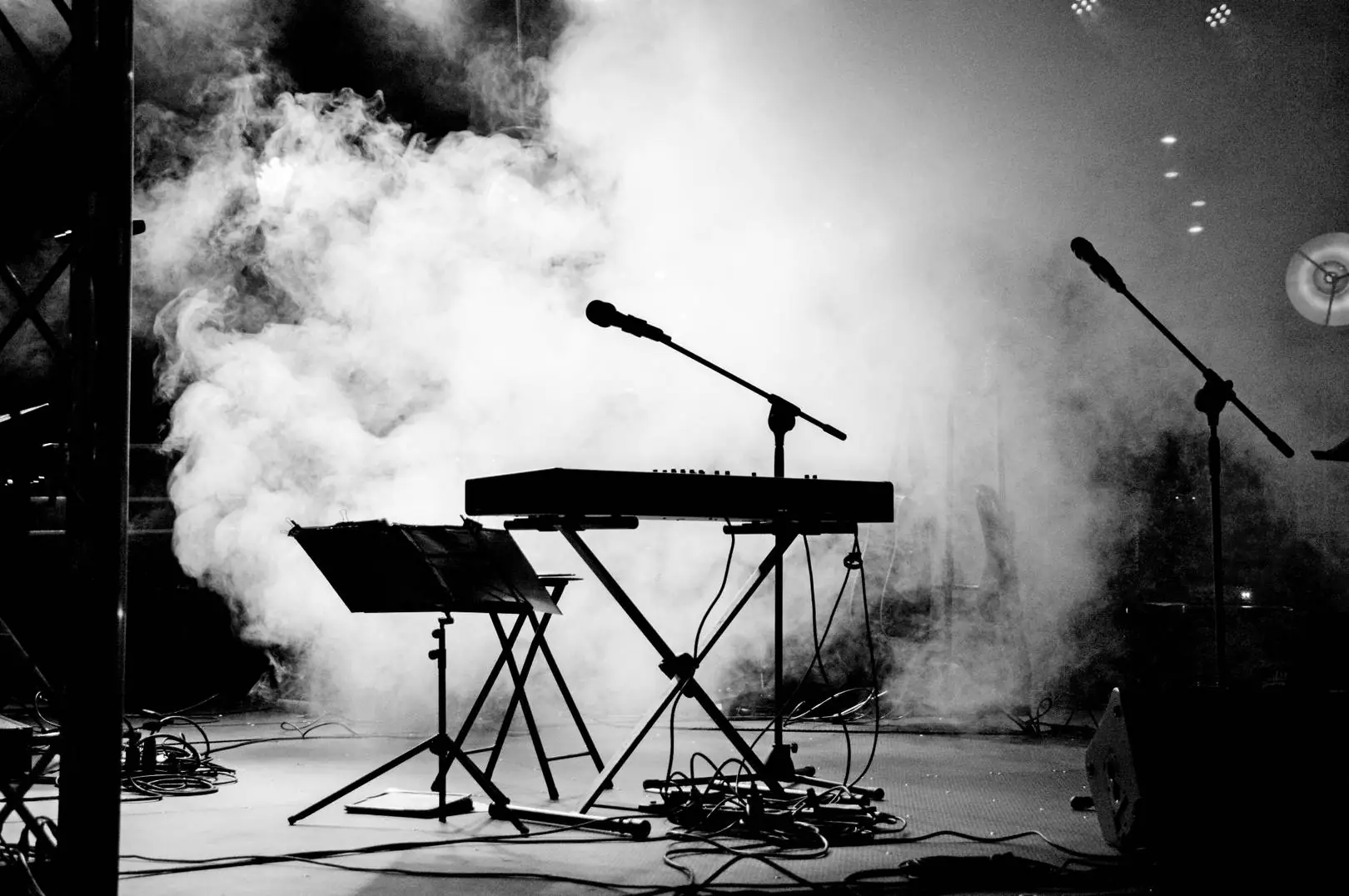
    Empty stage with smoke and keyboards

    History of Rock Music

    From the 1950s to today. How rock evolved, splintered, and survived.

    1950s

    The Big Bang

    Rock and roll didn't emerge from nothing. It was the inevitable collision of Black American musical traditions with postwar restlessness and the electric guitar. Chuck Berry invented the rock guitar solo. Little Richard brought the fire. Elvis Presley brought it to white America's living rooms, for better and worse.

    The 1950s established rock's fundamental tension: a Black art form filtered through white mainstream culture, commercially explosive and culturally dangerous. Buddy Holly showed that a band could write its own songs. Jerry Lee Lewis showed that rock could be genuinely unhinged. And the establishment, from parents to preachers to the FBI, showed that they were terrified of what this music represented.

    By decade's end, rock and roll had been declared dead multiple times. It was just getting started.

    Key Events
    1951: Jackie Brenston's 'Rocket 88' is recorded at Sun Studio, often cited as the first rock and roll record
    1954: Elvis Presley records 'That's All Right' at Sun Studio
    1955: Chuck Berry releases 'Maybellene,' inventing rock guitar
    1956: Little Richard releases 'Tutti Frutti' and 'Long Tall Sally'
    1957: Buddy Holly and the Crickets release 'That'll Be the Day'
    1958: The Kingston Trio sparks the folk revival that will feed into 1960s rock
    1959: The Day the Music Died: Buddy Holly, Ritchie Valens, and the Big Bopper killed in a plane crash
    1960s

    The Explosion

    The 1960s blew rock wide open. The British Invasion, led by the Beatles and the Rolling Stones, took American blues and R&B, ran it through British art school sensibilities, and sold it back to the world. Bob Dylan plugged in and proved rock could be literature. Jimi Hendrix proved the electric guitar was a universe unto itself.

    By mid-decade, rock had fractured into psychedelia, proto-metal, folk rock, and garage rock. The counterculture adopted it as its soundtrack. Woodstock became a myth. Altamont became a warning. The Velvet Underground played to small rooms and influenced everyone who was listening.

    The decade ended with the Beatles breaking up, Hendrix and Janis Joplin dead, and the Summer of Love curdling into something darker. But the infrastructure was built. Rock was now the dominant cultural force in the Western world, and it would stay that way for decades.

    Key Events
    1962: The Beatles release 'Love Me Do'; the Rolling Stones form in London
    1964: The British Invasion hits America; the Beatles appear on Ed Sullivan
    1965: Bob Dylan goes electric at Newport Folk Festival
    1966: The Beatles release 'Revolver'; the Beach Boys release 'Pet Sounds'
    1967: Monterey Pop Festival; Hendrix sets his guitar on fire; 'Sgt. Pepper's' released
    1968: Led Zeppelin forms; the MC5 and Stooges launch proto-punk in Detroit
    1969: Woodstock; Altamont; King Crimson releases 'In the Court of the Crimson King'
    1970s

    The Divergence

    The 1970s were rock's most creatively fertile decade, and its most contradictory. On one end, progressive rock pushed compositions to symphonic lengths and conceptual ambition. On the other, punk stripped everything back to three chords and rage. In between, heavy metal got heavier, glam rock got weirder, and Southern rock got sweatier.

    Led Zeppelin and Black Sabbath defined the decade's heaviness. Pink Floyd defined its ambition. The Ramones and the Sex Pistols defined its fury. David Bowie defined its fluidity. And disco, rock's sworn enemy, defined its dance floors, creating a cultural war that would shape the next decade.

    By 1979, punk had splintered into post-punk and new wave, metal had spawned the New Wave of British Heavy Metal, and rock was more diverse and vital than it had ever been.

    Key Events
    1970: Black Sabbath release their debut; the Beatles officially break up
    1971: Led Zeppelin IV; The Who's 'Who's Next'; prog rock peaks
    1973: Pink Floyd's 'The Dark Side of the Moon'; New York Dolls pioneer glam punk
    1975: Bruce Springsteen releases 'Born to Run'; Bohemian Rhapsody released
    1976: The Ramones debut; the Sex Pistols and Clash form in London
    1977: 'Never Mind the Bollocks' and 'London Calling' rewrite rock's rules
    1979: Joy Division releases 'Unknown Pleasures'; post-punk begins; AC/DC releases 'Highway to Hell'
    1980s

    The Split

    The 1980s split rock into two parallel universes. Above ground: MTV, hair metal, stadium tours, and synthesizers. Below ground: hardcore punk, indie rock, college radio, and the DIY networks that would eventually overthrow everything happening on the surface.

    The mainstream belonged to Van Halen, Def Leppard, Bon Jovi, and Guns N' Roses: big riffs, bigger hair, and arenas full of lighters. MTV made rock visual and turned bands into brands. The music was often great, sometimes terrible, and always loud.

    Meanwhile, Black Flag was touring in a van, R.E.M. was building a following through college radio, Sonic Youth was reinventing what a guitar could sound like, and the Pixies were developing the loud-quiet-loud dynamics that would detonate the mainstream in the next decade. The underground was building the bomb. The 1990s would light the fuse.

    Key Events
    1980: AC/DC's 'Back in Black'; Joy Division's Ian Curtis dies; John Lennon murdered
    1981: MTV launches; Black Flag releases 'Damaged'
    1982: Iron Maiden's 'The Number of the Beast'; Metallica forms thrash metal
    1984: Van Halen's '1984'; Minutemen's 'Double Nickels on the Dime'
    1986: Metallica's 'Master of Puppets'; Slayer's 'Reign in Blood'
    1987: Guns N' Roses' 'Appetite for Destruction'; Pixies form in Boston
    1989: Pixies' 'Doolittle'; Nirvana's 'Bleach'; the underground rumbles
    1990s

    The Revolution

    In September 1991, Nirvana released 'Nevermind' and the underground swallowed the mainstream whole. Within months, hair metal was dead, flannel was fashion, and bands that had been playing to hundreds were selling out arenas. Grunge, Nirvana, Pearl Jam, Soundgarden, Alice in Chains, dominated the first half of the decade.

    But the '90s were bigger than grunge. Radiohead pushed rock into electronic territory. Rage Against the Machine fused metal with hip-hop and radical politics. Tool made prog metal cerebral and massive. The Strokes and White Stripes were already forming the bands that would define the next decade's guitar revival.

    Cobain's death in 1994 cast a shadow over everything. The Britpop wars between Oasis and Blur dominated the UK. Nu-metal, Korn, Limp Bizkit, filled the mainstream void with varying degrees of quality. And Radiohead's 'OK Computer' predicted the anxious future that was already arriving.

    Key Events
    1991: Nirvana's 'Nevermind' and Pearl Jam's 'Ten' launch grunge into the mainstream
    1993: Nirvana's 'In Utero'; Smashing Pumpkins' 'Siamese Dream'
    1994: Kurt Cobain dies; Oasis and Blur ignite Britpop; Green Day's 'Dookie'
    1995: Radiohead's 'The Bends'; Foo Fighters debut
    1997: Radiohead's 'OK Computer'; Tool's 'Ænima'
    1999: The end of the decade sees nu-metal peak and the underground regroup
    2000s

    The Fragmentation

    The 2000s shattered rock into a thousand pieces, and that was both the crisis and the opportunity. The monoculture was over. No single band could dominate the way Nirvana or Led Zeppelin had. Instead, a dozen scenes thrived simultaneously.

    The garage rock revival, the Strokes, White Stripes, Yeah Yeah Yeahs, brought guitars back to the mainstream. Queens of the Stone Age and the Mars Volta kept heavy rock inventive. Arcade Fire and the National built indie rock into an arena-filling force. And metal had a golden age of its own: Mastodon, Gojira, Baroness, and Opeth pushed the genre's boundaries further than ever.

    The internet changed everything. MySpace broke bands. File-sharing killed the old business model. But the music was thriving. If you knew where to look, the 2000s produced as much great rock as any decade before.

    Key Events
    2001: The Strokes' 'Is This It' and White Stripes' 'White Blood Cells' revive guitar rock
    2002: Queens of the Stone Age's 'Songs for the Deaf' with Dave Grohl on drums
    2003: The White Stripes' 'Elephant'; MySpace begins breaking bands
    2004: Arcade Fire's 'Funeral'; Green Day's 'American Idiot'
    2005: Gojira's 'From Mars to Sirius'; Arctic Monkeys break via internet hype
    2006: Arctic Monkeys' debut becomes fastest-selling UK album; Tool's '10,000 Days'
    2007: Radiohead self-releases 'In Rainbows' on pay-what-you-want; the old model dies
    2010s–2020s

    The Revival

    Rock was declared dead so many times in the 2010s that the genre started wearing it as a badge of honor. The mainstream belonged to hip-hop and pop, but rock didn't die. It went underground, got weirder, and came back swinging.

    The Black Keys and Jack White kept blues-rock alive. Tame Impala blurred the line between rock and psychedelic pop. Greta Van Fleet proved there was still an audience for vintage hard rock. Fontaines D.C. and IDLES brought post-punk fury to a new generation. And metal continued its quiet golden age. Gojira, Mastodon, and Turnstile brought heavy music to festival main stages.

    The 2020s have seen a genuine revival: Måneskin won Eurovision with rock and became global stars. Wet Leg proved indie rock could still be fun and massive. The genre that was supposed to be dead keeps finding new ways to be alive, which is historically, exactly what rock and roll has always done.

    Key Events
    2011: Foo Fighters' 'Wasting Light'; Black Keys' 'El Camino'
    2013: Queens of the Stone Age's '...Like Clockwork'; Arctic Monkeys' 'AM'
    2016: Gojira's 'Magma'; Radiohead's 'A Moon Shaped Pool'
    2019: Rammstein's untitled comeback; Tool's 'Fear Inoculum' after 13 years
    2021: Måneskin wins Eurovision with rock; Turnstile's 'Glow On' breaks through
    2022: Wet Leg's debut; Taylor Hawkins dies; Foo Fighters continue
    2024: Gojira opens Paris Olympics; rock's presence in mainstream culture resurges
    Explore More
    ↑ Back to top

    We use cookies for analytics. Privacy Policy